Fall in Bryce Canyon is one of those travel secrets that really should not be a secret. Summer gets the big crowds, winter gets the dramatic snow photos, and spring gets the wildflowers. But fall? Fall quietly walks in with crisp mornings, golden light, cooler trails, and just enough breathing room to remind you why you came all this way in the first place.
If summer Bryce Canyon is bright, busy, and blazing, autumn is the park after it has had a deep breath and a cup of coffee. The hoodoos still glow. The overlooks still stop you in your tracks. The skies still stretch forever. But the temperatures are friendlier, the trails feel more inviting, and sunset somehow manages to look like it was edited by someone with excellent taste.
So if you are planning a Southern Utah trip in September, October, or early November, congratulations. You may have accidentally picked one of the best times of year to visit Bryce Canyon.
Why Fall Is Such a Great Time to Visit Bryce Canyon
Bryce Canyon sits high on the Paunsaugunt Plateau, with many areas around 8,000 feet in elevation. That means fall arrives with cooler air earlier than you might expect, especially in the mornings and evenings. You can wake up needing a jacket, hike comfortably through the middle of the day, and still catch golden hour without feeling like the sun is personally testing you.
The cooler weather makes fall a dream season for hiking. Trails like Queens Garden, Navajo Loop, Peekaboo Loop, and the Rim Trail all become a little more forgiving when you are not battling peak summer heat. You still need water, sunscreen, layers, and good shoes, because Bryce Canyon is still Bryce Canyon. But fall gives you more room to enjoy the adventure instead of planning your entire day around avoiding the hottest hours.
And then there is the light. Oh, the light. Fall sun hits the hoodoos at a lower angle, which means deeper shadows, warmer colors, and photos that make your camera look more talented than it really is.
Best Fall Hikes and Viewpoints
If this is your first trip to Bryce Canyon, start with the classics. Sunrise Point and Sunset Point are easy to reach and deliver those “yep, this is why people talk about this place” views. The Rim Trail between them is short, scenic, and perfect if you want a big payoff without committing to a major hike.
For a fuller experience, connect Queens Garden and Navajo Loop. This route takes you below the rim and into the hoodoos, where the formations feel less like scenery and more like a strange stone city. Start early if you want quieter trails and softer light.
Inspiration Point and Bryce Point are also fall favorites. The views are wide, layered, and dramatic, especially when the canyon is catching late-afternoon color. Just know that parking can still fill up, so the park shuttle is a smart move when it is running.
If you want something a little quieter, head toward Rainbow Point and the Bristlecone Loop. The drive alone is worth it, and the higher elevation brings forested sections, sweeping views, and a different side of Bryce Canyon that many quick-stop visitors miss.
Fall Travel Tips for Bryce Canyon
Pack layers. This is not optional unless your vacation goal is shivering heroically at sunrise. Fall temperatures can swing quite a bit between morning, afternoon, and evening, so bring a jacket, breathable hiking clothes, and maybe a warm hat if you are chasing sunrise or stargazing.
Check current conditions before you go. Fall weather is usually beautiful, but storms, early snow, fire restrictions, and construction updates can all affect plans. The National Park Service keeps current information posted, and it is worth a quick look before heading into the park.
Use the shuttle when available. The Bryce Canyon Shuttle usually runs into mid-October, and it can save you from the classic national park game of circling a full parking lot while everyone in the car pretends to be patient.
Do not skip the night sky. Bryce Canyon is an International Dark Sky Park, and fall evenings can be incredible for stargazing. Bring warm layers, use red light instead of white light when possible, and give your eyes time to adjust. The sky here does not mess around.
See the Season from Above
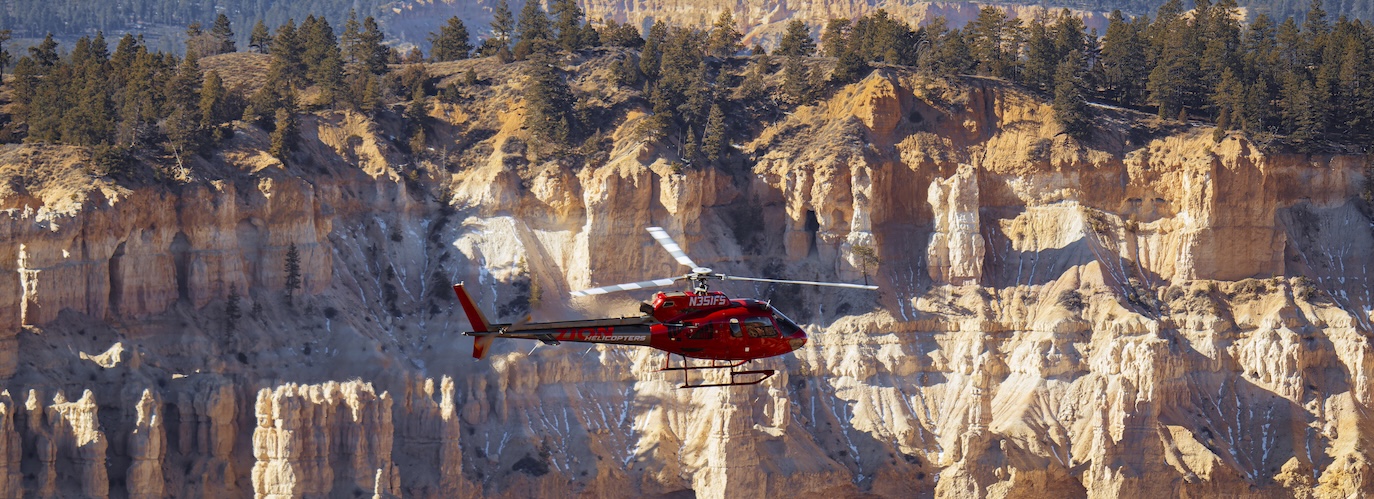
Fall is also an amazing time to see Bryce Canyon from the air. From the rim, you get the details. From a helicopter, you get the whole story. The amphitheaters, cliffs, plateaus, forests, and distant desert landscapes all connect in a way that is hard to fully understand from the ground.
A scenic helicopter tour is especially great in fall because the air is cooler, the light is beautiful, and the landscape has that crisp, high-desert clarity that makes every ridge and canyon pop. Whether you are fitting in a quick flight before a hike or going all-in with a longer Bryce Canyon and Grand Staircase route, it is the kind of perspective that stays with you.
The Bottom Line
Fall in Bryce Canyon is calm, colorful, and seriously underrated. The trails are cooler, the viewpoints are glowing, the skies are dark, and the whole park feels a little easier to enjoy. It is still popular, because obviously everyone enjoys jaw-dropping red rock scenery, but fall gives you a sweeter, slower version of the Bryce Canyon experience.
So pack the jacket, charge the camera, bring more water than you think you need, and get ready for one of Southern Utah’s best seasons. Bryce Canyon is already stunning, but in fall, it really knows how to show off.